
Blog
 Kate
KateShoppers love your products.
But they hesitate — not because they don’t like your clothes, but because they’re not confident about which size will fit.
For fashion merchants, size uncertainty is one of the biggest silent conversion killers. Many customers leave the product page, postpone their purchase, or abandon their cart entirely simply because they cannot decide between two sizes.
In this article, we’ll walk through why size confusion happens, how it affects your conversion rate, and what a seamless “measure-once, auto-recommend-everywhere” experience looks like. Finally, we’ll show how a smart sizing tool like Fitfolio helps implement this experience in real Shopify stores.
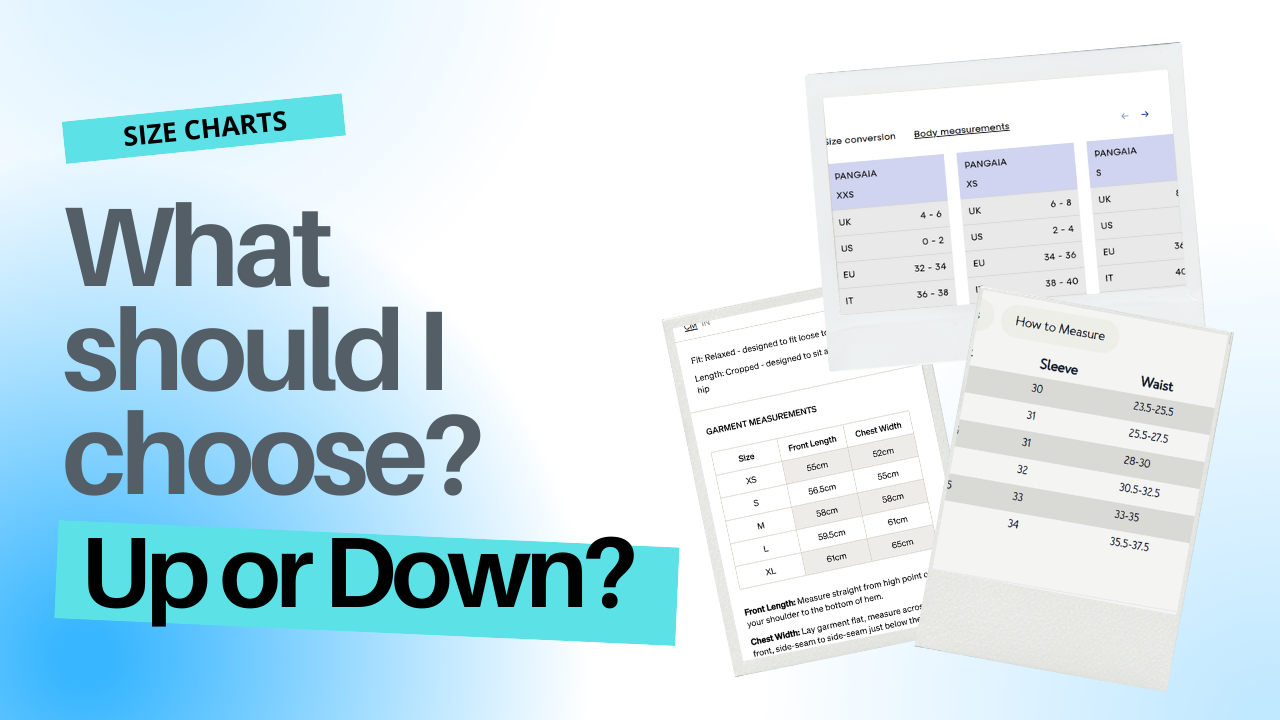
Why Size Confusion Happens
Size confusion is not the customer’s fault — it’s built into the fashion industry itself.
1. Sizes aren’t standardized across brands
A Medium in one store may equal a Small or Large in another. Shoppers have learned this the hard way, and they no longer trust the label alone.
2. Different categories follow different fit rules
Jeans, dresses, coats, shirts, and knitwear each have different constructions, intended fit, and tolerance. A customer may be a 27 in jeans but an M in tops — it’s normal, but confusing.
3. Fabric stretch affects the final fit
Stretchy knitwear, rigid denim, and structured suiting all behave differently on the body. Customers can’t predict this from photos alone.
4. Size charts are hard to interpret (especially on mobile)
Mobile shoppers must scroll, compare, switch tabs, and mentally convert measurements. The more effort required, the higher the chance they leave.
How Size Confusion Impacts Sales
When customers aren’t confident about fit, they tend to:
leave the product page
choose “maybe later”
order two sizes and return one
avoid buying new brands entirely
Every one of these behaviors reduces conversions and increases return costs. Merchants often receive repeated questions like:
“Does this run small?”
“Should I size up?”
“I’m between sizes — what should I choose?”
These questions represent hesitation, not lack of interest.
A Problem-Solving Framework for Better Size Confidence
Instead of expecting customers to figure sizing out themselves, merchants can guide them through a smoother decision-making journey. A practical approach includes:
1. Reduce cognitive load
Minimize the effort required to compare size charts or interpret measurements.
2. Remove repeated effort
Customers shouldn’t need to fill out a size quiz every time they view a product.
3. Provide contextual recommendations
Size suggestions should appear directly on the product page right when the customer needs them.
4. Adapt to different clothing categories
A good recommendation must account for category-specific rules—jeans, dresses, outerwear, knitwear, and more.
5. Build trust with consistency
Recommendations should remain stable across products, reducing uncertainty and anxiety.
This framework leads to a more confident shopping experience — and it’s where Fitfolio becomes a practical solution.
The Ideal Experience: Measure Once, Get Automatic Size Recommendations Storewide
The most seamless fit experience is simple:
The shopper enters their body measurements once.
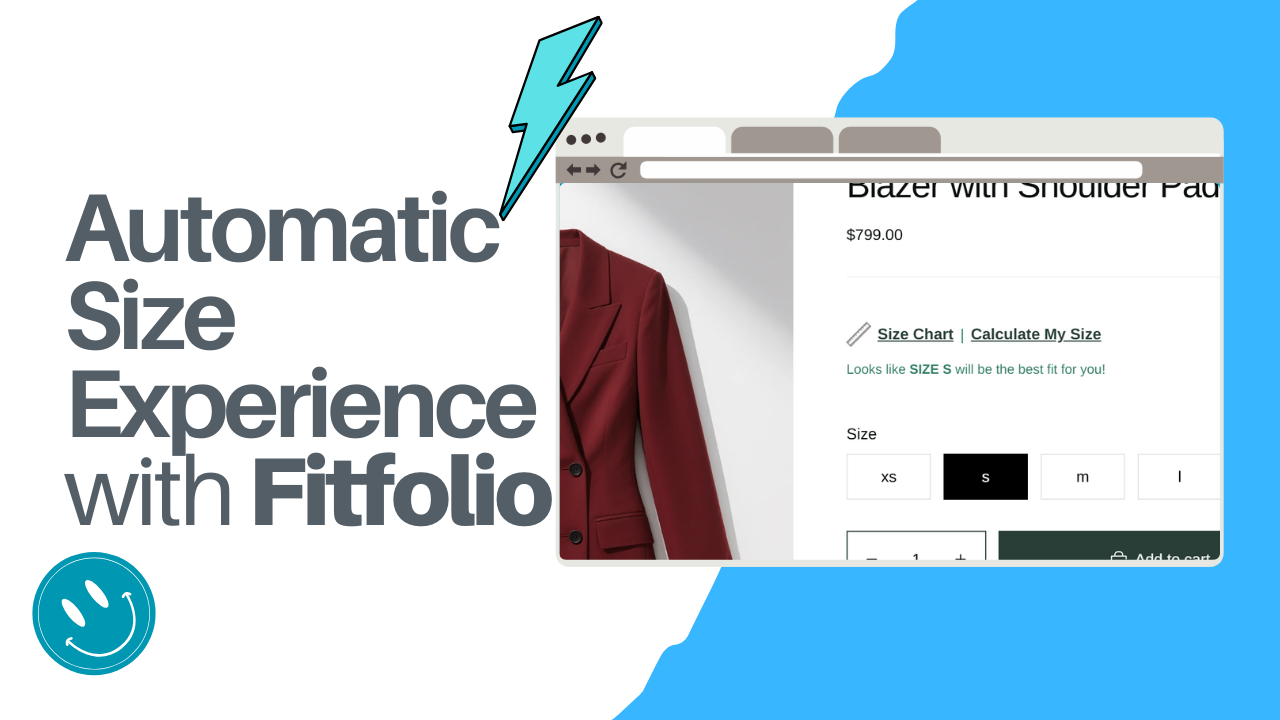
After that, every product page automatically shows their recommended size.
No repeated quizzes.
No manual comparison.
No overthinking.
This is the type of experience shoppers naturally expect in modern online fashion stores — but surprisingly few apps deliver it well.
How Fitfolio Helps Implement This Experience
Fitfolio is a Shopify app designed specifically to create a seamless, automated sizing experience based on real measurements and AI-assisted logic. It isn’t positioned as a “typical size-chart app” — it’s a solution built to help merchants reduce hesitation and return-related costs.
Here’s how it supports the framework above:
1. Customers enter their measurements once
Fitfolio asks shoppers for simple body measurements — only once.
From that point on, the app remembers the data for future sessions.
This removes repetitive effort and creates a smooth browsing experience.
2. Category-specific AI sizing logic
Fitfolio doesn’t simply match numbers to a chart.
Its AI-inspired logic considers:
garment type
fabric stretch levels
intended fit (regular, slim, relaxed)
safety allowances
category rules (jeans vs dresses vs coats)
This ensures recommendations feel more accurate and more trustworthy.
3. Automatic size recommendations appear on every product page
As the customer browses, Fitfolio automatically displays:
“Your Recommended Size: M”
for each product, without requiring any further input.
This contextual guidance is exactly what reduces hesitation at the moment of purchase.
4. Helps merchants reduce fit-related returns
Wrong-size returns are expensive. By helping customers pick the right size on the first try, Fitfolio supports fewer return requests and a more predictable fit experience over time.
A Smoother Shopping Journey Leads to Higher Confidence
When customers feel confident about fit, everything improves:
browsing becomes easier
sizing anxiety disappears
cart abandonment decreases
return rates drop
customers trust the brand more
Small improvements in sizing guidance can produce meaningful improvements in conversions — simply because sizing is one of the biggest friction points in online fashion shopping.
For any questions or further assistance, please don't hesitate to reach out. Simply leave us a message, and we will respond to you as soon as possible. We're here to help and look forward to working with you!